Threads & thoughts
Deep dives, project write-ups, and articles from things I've learned — scroll to follow the thread.
- 01Thread
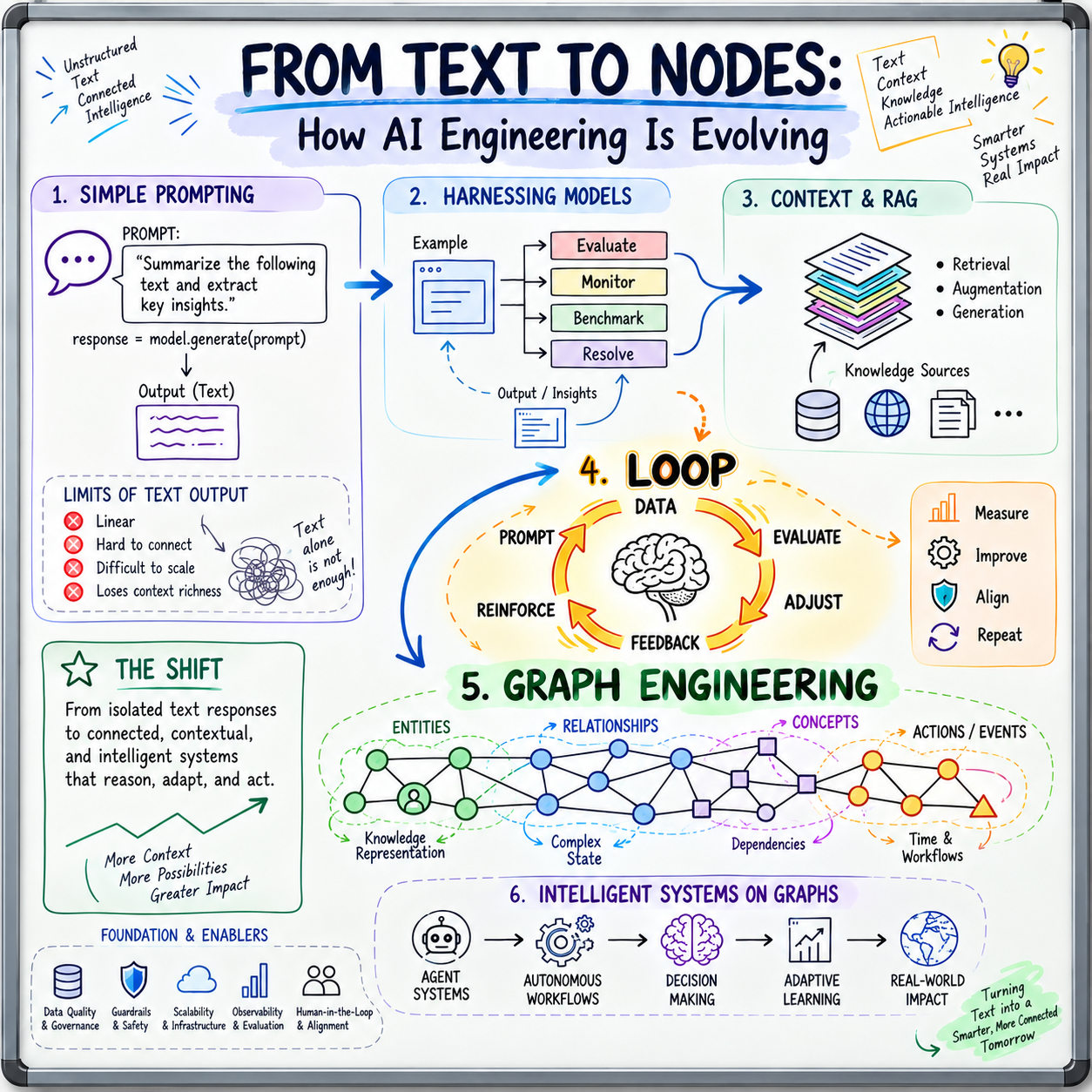
From Text to Nodes: How AI Engineering Is Evolving
From prompt engineering and context engineering to harnesses, loops, and graphs — the unit of AI engineering is gradually moving from the model to the system around it.
- 02Thread
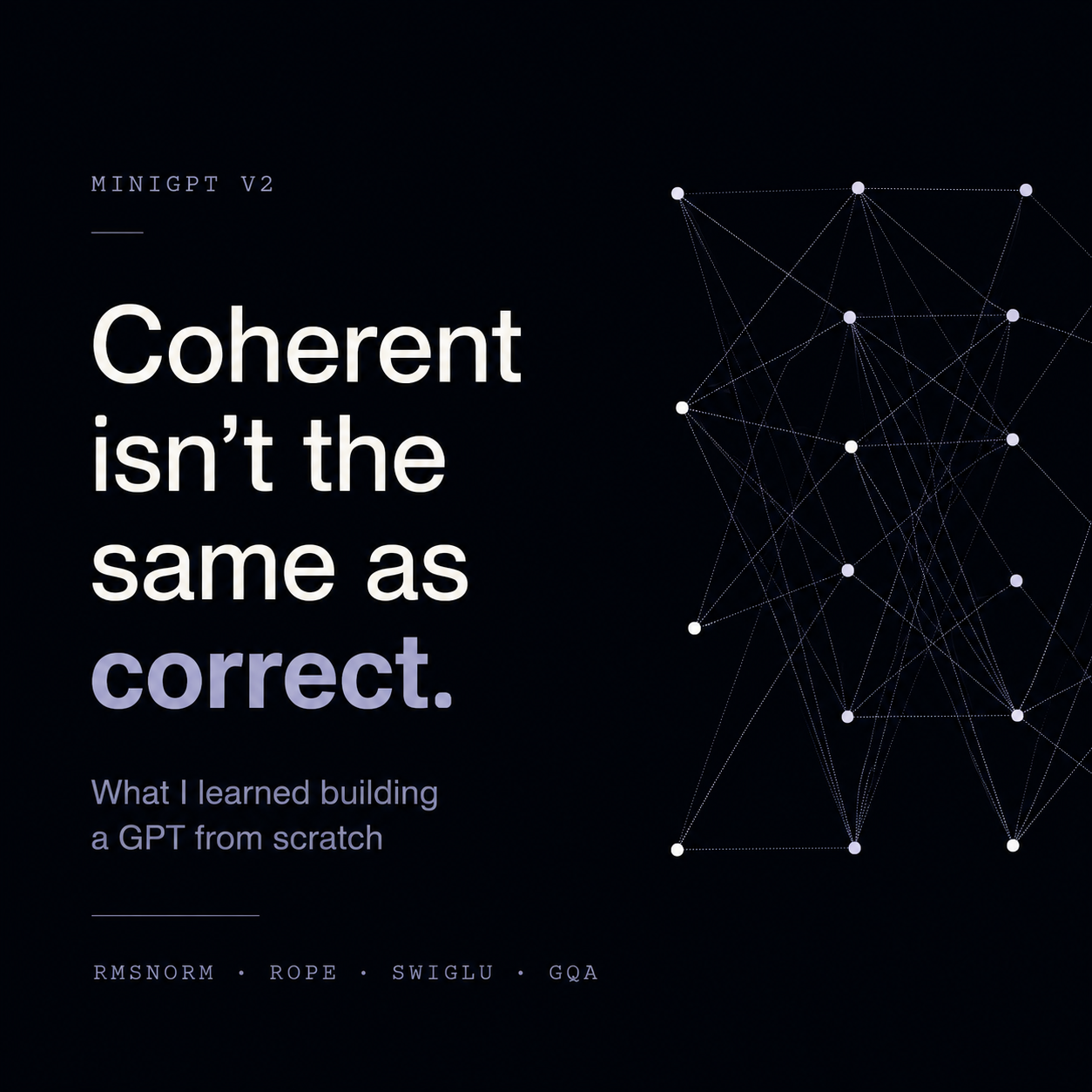
Coherent Isn't the Same as Correct: What I Learned Building a GPT From Scratch
Built a mini GPT-v2 from scratch using a modern Transformer stack: RMSNorm, GQA, SwiGLU, and RoPE, along with a BPE tokenizer implemented from scratch. Trained on 15,000 TinyStories samples with 6.8M parameters in Google Colab, then deployed the model on Render with Gradio for interactive inference.
- 03Thread
Introducing Autosage: A Remote Automation Platform with an AI Copilot
Built an AI-powered automation platform to control, orchestrate, and monitor infrastructure from one place. The built-in AI copilot allows users to automate tasks, manage resources, and gain insights into their systems.
- 04Thread
How a Transformer Actually Learns — Loss, Backprop & Going Deeper
Training a Transformer model involves optimizing millions of parameters through concepts like Multi-Head Attention, Neural Networks, backpropagation, and learning rate optimization. These allow the model to learn patterns in data, perform tasks like language understanding and generation effectively.
- 05Thread

How Transformers Actually Work — From First Principles
Transformers are the foundation of modern AI systems, enabling models to understand language and complex data by using attention mechanisms. They analyze relationships between all parts of the input at once, allowing them to capture context, meaning, and long-range dependencies efficiently.
- 06Thread
Docker: Way to Containerization
Docker is an open-source platform that allows developers to automate the deployment of applications in lightweight, portable containers. These containers package everything needed to run an application, ensuring consistent performance across different environments.